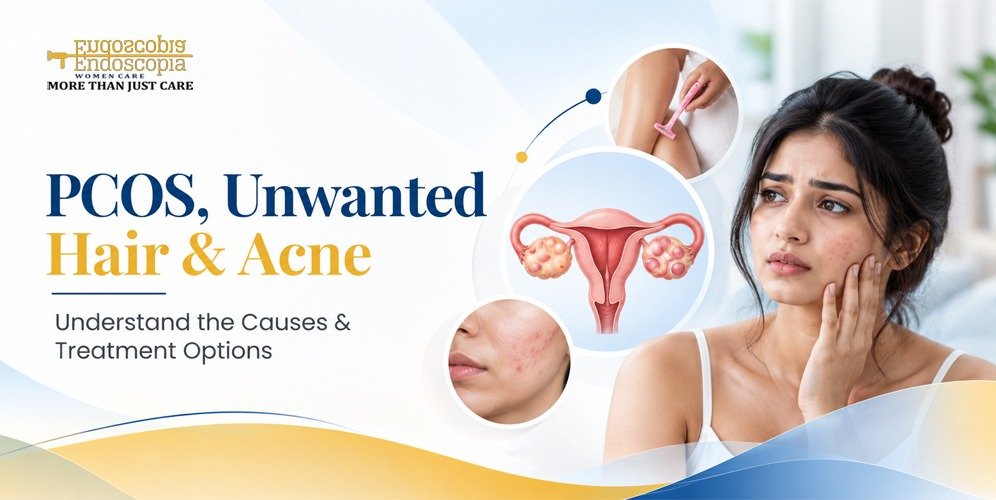

The two most visible signs of PCOS are unwanted hair and persistent acne. It is important to know that both of these issues can be linked to a hormonal imbalance. Androgen levels rise because of insulin resistance. That can wreak havoc on hair follicles and oil glands, leading to hair in unwanted places and stubborn acne. Since these two issues are caused by the same reason, a comprehensive treatment plan works for both.
Timely recognition of PCOS symptoms and diagnosis can ensure that treatment starts quickly. Most people notice a reduction in acne breakouts within a few months. But hair changes might require a little longer to show up. Keep reading this blog to learn more about what causes unwanted hair and acne breakouts in PCOS and what can help.
Reasons Behind Unwanted Hair and Acne in PCOS
Two hormonal shifts are responsible for acne and body hair in PCOS. These two hormones are androgens and insulin. They work together and worsen each other.
Increased Androgen Production
Androgen production is normal in women. But those with PCOS have a higher level of androgens in their bodies than normal. The hair follicles on the body and the oil glands in the skin react strongly to these androgens. Fine hair usually becomes dark and coarse. The skin glands start producing more oil, leading to blocked pores. This is why the same hormone that thickens hair on the chin can leave skin feeling greasy and prone to spots.
The Link with Insulin Sensitivity
Insulin resistance is common in the majority of women with PCOS. That means the body requires more insulin to regulate blood sugar levels. A higher level of insulin can lead to an increased production of androgens. Thus, a loop gets created. Skin treatment in isolation usually doesn’t help for long. You need to consult your doctor about insulin resistance to find long-term results.
What PCOS Hair and Acne Look Like
Looking out for a few patterns will help you identify whether your hair and acne are associated with PCOS. You will need to seek a medical opinion to confirm what is happening. But here are the common signs that you should know:
Hair Growth Patterns
Hair growth due to PCOS is usually coarse and dark. They tend to appear in the following areas:
- Upper lip
- Chin
- Chest
- Lower abdomen
- Inner thighs
- Lower back
Density and thickness vary between women, so that you may notice only one or two of these areas. Tracking where and when new hair appears gives your doctor useful information.
Acne Patterns
Acne linked to PCOS is usually found along the jawline and chin. It is often deep and tender rather than surface-level. Breakouts are most likely to appear around your periods. Whiteheads and blackheads might appear. But hormonal acne usually manifests in the form of deep and painful lumps. Severe breakouts alongside irregular periods hint at PCOS most of the time. But you should still consult your doctor for confirmation.
Red Flags: When It May Not Be PCOS
PCOS-related changes show up over months or years. If you notice any kind of sudden or dramatic shifts, the reason might be something else because several other conditions can increase androgen production.
Seek medical attention when you notice any of these:
- Quick hair growth
- Deep voice
- Change in breast size
- Sudden acne breakouts
How Doctors Determine PCOS
Doctors look into multiple things before confirming a PCOS diagnosis. The assessment usually starts with a discussion about your medical history. You should also inform your doctor about any medications that you might be taking. A physical examination might also be performed.
Apart from these, your doctor might recommend the following tests:
- Blood tests for testosterone: These can help determine increased levels of androgens in the body.
- Thyroid test: An underactive or overactive thyroid gland might also cause acne and unwanted hair.
- Pelvic ultrasound: It helps determine whether the ovaries look polycystic.
Doctors use the results of all these tests to confirm a diagnosis. A confirmed diagnosis requires two of these three:
- Irregular periods
- High androgens (determined by a blood test or other symptoms)
- Polycystic ovaries, determined by an ultrasound
Remember that an ultrasound scan result that looks normal does not rule out PCOS because the other two signs are enough.
Quick Tips:
- Ask the clinic whether you should wait before removing unwanted hair.
- Always take a list of medicines to your appointment.
Treatment Options That Work
Treatment works best when it tackles the hormones, the skin and the existing hair together. According to the PCOS Awareness Association, hair medicines often take six months or more to show results, so patience is part of the plan.
Hormonal Treatment
Hormonal options treat the cause of the problem. They do not just cover up the symptoms. Your doctor may suggest one of the following:
- Birth control pills to lower androgen levels.
- Anti-androgens such as spironolactone. Results are modest. They are not safe in pregnancy, so you need contraception.
- Metformin (if you have insulin resistance).
Your doctor will choose the right option for you. They will look at your symptoms and your cycle. They will also ask whether you plan to conceive soon.
Skin Care and Existing Hair
Proper skincare starts with following a gentle but consistent routine. You can consult a dermatologist to seek help for deep or scarring acne. Avoid layering multiple products at once. A simple routine that matches your skin type can help more than chasing beauty trends.
You will find multiple methods for unwanted hair removal. But the duration of the results varies for each.
| Method | What to expect |
| Shaving and waxing | Short-lived results |
| Eflornithine cream | Slows new growth only |
| Laser | Suits dark hair |
| Electrolysis | Suits blond or white hair |
Laser and electrolysis both need several sessions, and neither is guaranteed to be permanent.
What to Expect and When
Acne breakouts usually reduce quickly. With time, the new hair that grows becomes finer and thinner. It is important to stay consistent with treatments instead of trying something new every week. If you are planning a pregnancy, it is extremely important to inform your doctor because some medications might need to be stopped. In some cases, those with PCOS might also need to discuss infertility treatment options with their doctors.
Where Diet and Lifestyle Fit
Certain dietary and lifestyle changes might help regulate the hormones. It will particularly help in reducing the insulin side of the loop described earlier.
Blood Sugar and Weight
Maintaining a steady blood sugar level will reduce insulin. That means there will be no pressure on the ovaries to produce excess androgens. In some cases, losing 5-10% of body weight can help the body respond better to insulin. Regular movement is also good for managing insulin resistance. You can also start following a PCOS diet plan that gives you steady energy throughout the day instead of focusing on strict dietary restrictions.
Stress and Sleep
Stress and sleep have a strong connection with hormones. Ongoing stress and a poor sleep schedule make it more difficult to manage hormonal imbalances. Minor changes like following a consistent bedtime routine can help a lot.
Everyday Skin and Hair Care
Keep these habits in your routine:
- Cleanse gently, without harsh scrubbing.
- Resist picking, as it can lead to scarring.
- Patch-test hair-removal creams on a small area first.
- Use sun protection after laser, as treated skin is more sensitive.
If a product stings or leaves your skin red for more than a day, stop using it and ask your doctor.
The Emotional Side
Acne breakouts and unwanted hair can bring emotional distress. Women facing these issues often feel self-conscious and suffer from low self-esteem. These feelings are valid and have nothing to do with vanity or being shallow.
You don’t have to wait until you face severe symptoms to seek help from a doctor. Seeking support for how you feel is also a part of PCOS care.
When to See a Gynaecologist
A gynaecologist leads the hormone workup, while a dermatologist can step in for stubborn skin concerns or laser treatment. Seeing the right specialist early usually saves months of trial and error.
If you need a gynaecologist in Jaipur, Dr Pankhuri Gautam would be right choice to help you build a plan that fits your symptoms and your goals. Our clinic is open Monday to Saturday from, and on Sunday on an appointment basis.
FAQs
Why do I have facial hair and acne with PCOS?
A higher level of androgen production affects your skin’s oil glands and hair follicles, thickening the hair and making blocked pores more common. High insulin then makes the ovaries produce even more of the hormones, so the two problems occur together and worsen each other.
Will PCOS facial hair go away completely?
Medications can slow down new growth and thin out existing hair, while laser or electrolysis can remove hair that’s already grown. It’s not always permanent, so that most women will require ongoing management. Your doctor can help you devise a plan that fits your skin and your budget.
How long do treatments take to work?
Once you start using hair medicines, it might take around 6 months or even more to see noticeable results. The hair that grows back is usually lighter and finer. Acne tends to clear up sooner. Many women notice improvements within a few weeks of treatment.
Can diet help PCOS acne and unwanted hair?
Eating in a way that keeps blood sugar more stable eases the insulin side of PCOS, which can take some pressure off androgen production. It will not remove hair that has already grown, so it works best as support alongside medical treatment.
Can I take anti-androgen medicine if I want to get pregnant?
No, because anti-androgens such as spironolactone are not safe in pregnancy, and you need reliable contraception while you take them. Please plan your treatment with your doctor, who can time any medicines around your pregnancy goals.
When should I worry about sudden hair growth?
You must promptly seek medical opinion if you notice rapid hair growth, sudden acne breakouts, breast changes, or a deeper voice. These symptoms are associated with several conditions other than PCOS. Book an appointment rather than waiting.