
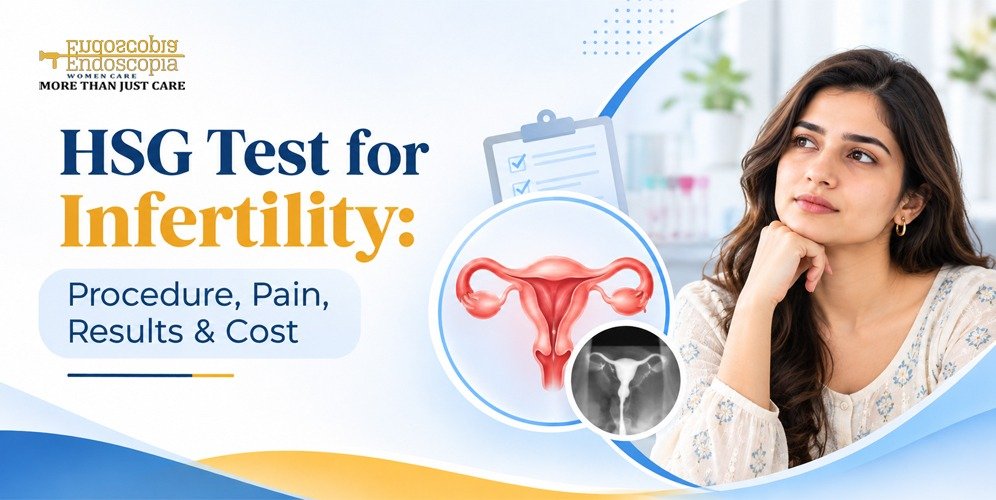

An HSG test is an X-ray check of your uterus and fallopian tubes. It is often advised during an infertility workup. If you’re wondering why it’s done, what happens on the table, whether it hurts and what the results mean, you’re not alone. Here are clear answers to each, in simple language. Keep reading so you know exactly what to expect.
What Is an HSG Test?
An HSG test is an X-ray procedure that shows the inside of your uterus and whether your fallopian tubes are open. HSG is short for hysterosalpingography.
During the test, a doctor gently passes a contrast dye through your cervix, which is the lower opening of the uterus. It is a liquid that shows up clearly on X-rays. As the dye fills the uterus and flows into the tubes, X-ray images capture its path. That’s why it is also known as the “fallopian tube dye test.“
Is HSG a Blood Test?
No, HSG is an imaging procedure, not a blood test. People often search for an “HSG blood test” because so many fertility checks involve bloodwork, but this one needs no blood sample.
Your doctor may still ask for separate blood or urine tests beforehand, such as a pregnancy test. So, what is an HSG tube test exactly? In plain words, it’s a picture of your uterus and tubes. Some clinics simply call it an HSG tube test.
Why Is an HSG Test Done for Infertility?
An HSG test is done to see whether blocked fallopian tubes or changes inside the uterus could be getting in the way of pregnancy. The fallopian tubes are the thin passages that carry an egg from the ovary to the uterus. If a tube is blocked, the egg and sperm may never meet.
Many women ask why HSG test is done. It gives your doctor two useful answers:
- Whether your tubes look open or blocked
- Whether the uterine cavity, the space inside your uterus, looks normal or has changes
An HSG test for female infertility helps your doctor decide on further tests or treatment. It doesn’t check egg quality, and it can’t explain every cause of infertility.
When Is an HSG Test Done, and How Should You Prepare?
An HSG test is usually scheduled after your period ends and before you ovulate. That timing helps rule out pregnancy and gives clearer pictures. If your cycles are irregular, follow whatever scheduling advice your clinic gives you. They’ll usually tell you the exact day, so you don’t have to work it out yourself.
Before the day, tell your doctor about:
- Any chance you could be pregnant
- Signs of infection, like fever, unusual discharge or pelvic pain
- Any past reaction to contrast dye
It’s also worth asking about pain relief and double-checking what to do about food, medicines and intercourse. Every clinic has its own rules, so stick to the ones you’re given, even if a friend was told something different.
How Is an HSG Test Done?
The HSG test procedure involves a few simple steps. Here’s how the HSG procedure usually goes:
- Before the test: The doctor goes through your medical history and instructions, and you sign a consent form.
- Positioning: You lie on an examination table, and the cervix is reached and cleaned.
- Introducing the dye: A thin tube is passed through the cervix, and the contrast dye is introduced.
- Taking images: X-ray pictures show how the dye moves through your uterus and tubes.
- After the procedure: The tube is removed, and you rest for a short while.
The HSG test process itself is brief, but the whole appointment takes longer because of check-in, preparation and recovery. If you’re wondering how much time the whole process takes, plan for more than just the scan. Knowing about the steps involved in the HSG procedure ahead of time often takes the edge off the nerves, and you can always ask the team to explain each step as it happens.
Is the HSG Test Painful?
HSG can be uncomfortable, but most people describe it as pressure or period-like cramps. Pain varies a lot from person to person, and for some it can be quite strong.
You’re most likely to feel it when the tube is placed and while the dye enters the uterus. Cramps can linger for a while afterwards.
A couple of things help:
- Talk about pain relief with your doctor before the day
- Tell the team during the procedure if the pain feels like too much
How much it hurts says nothing about whether your tubes are blocked. Don’t hesitate to ask the team to pause if you need a moment.
What Do HSG Test Results Mean?
HSG results show whether the dye passed through your tubes and whether your uterine cavity looks normal. Here’s what the common findings can mean:
| Finding | What it means |
| Both tubes appear open | The dye passed through both tubes. That’s reassuring, but other fertility factors still need to be looked at. |
| One or both tubes appear blocked | You may need further assessment, because a temporary spasm or a technical issue can sometimes affect the findings. |
| Changes in the uterine cavity | Your doctor may suggest more imaging or an examination to understand what the change is. |
Some clinics share findings the same day, and others take longer, so ask when yours will be ready. Your doctor should read the report alongside your other fertility tests. One report rarely tells the whole story. If something looks off, try not to panic, because many findings need a second look.
Need expert advice?
Have questions about your HSG test or report?
Consult Dr. Pankhuri Gautam, a gynecologist in Jaipur, for personalised guidance.
What Are the Side Effects of an HSG Test?
HSG test side effects are usually mild, and most people feel normal again soon. These effects tend to settle on their own.
Common Effects and Recovery
You may notice:
- Mild cramps, like period pain
- Light spotting, which is common
- Some dye leaking out as discharge
Wear a sanitary pad and follow the aftercare instructions your clinic gives you. Go back to your routine, and to intercourse, only when your clinic says it’s fine. Rest if you feel like it; there’s no need to push through the day.
When Should You Contact a Doctor?
Call your doctor promptly if you have:
- Fever
- Severe or worsening abdominal pain
- Heavy bleeding
- Foul-smelling discharge
- Fainting
These can be signs of infection or another problem, so don’t wait for them to pass.
How Much Does an HSG Test Cost in India?
An HSG test in India typically costs around ₹2,000 to ₹3,400. The final price depends on your city, the facility and what the package includes. Treat these as rough figures rather than a fixed price.
Before you book, ask whether the price covers:
- Contrast dye
- Consultation
- Preliminary tests
- Reporting
A package that looks cheaper can end up costing more if you pay for each item separately.
To Conclude
Your HSG report is just one piece of your fertility picture. Talk through your results and next steps with your gynaecologist, who can read them alongside your other tests. Book a consultation if you have questions.
Frequently Asked Questions
1. Can an HSG Test Improve Your Chances of Pregnancy?
HSG is mainly a diagnostic test, meaning it looks for problems rather than treating them. Some research suggests the dye flush may sometimes clear minor tubal debris, but nothing is guaranteed. Your doctor can tell you whether it applies to you.
2. Can You Get Pregnant if One Fallopian Tube Is Blocked?
Yes, pregnancy may still be possible if the other tube is open and working. Much depends on your overall fertility assessment, including ovulation, your partner’s semen analysis and your age. Your doctor can guide the next steps.
3. When Can You Try to Conceive After an HSG Test?
There’s no single waiting period that suits everyone. Advice depends on your symptoms, your results and your clinic’s protocol. Follow your treating team’s instructions, and ask them directly if you’re unsure.