
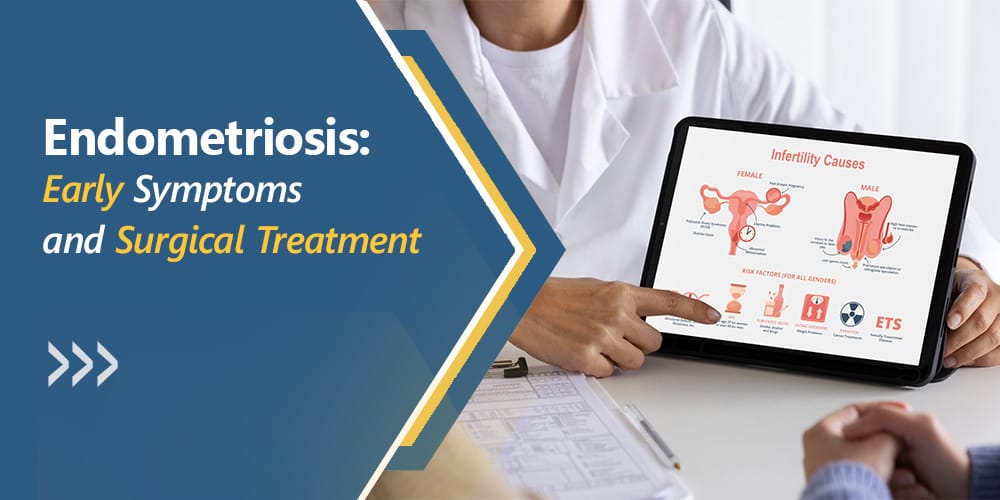
Catching endometriosis early symptoms and surgical treatment are very important when it comes to treating this long-term, inflammatory condition in which tissue similar to the lining of the uterus grows outside of the uterus, causing severe pelvic pain and infertility.
Modern clinical management emphasizes detection of early symptoms of endometriosis to circumvent the customary 10-year delay for a diagnosis in India. Evidence-based protocols favor laparoscopic endometriosis surgical treatment over medical suppression, achieving pregnancy rates of up to 82% and a significant reduction in pain recurrence.
Why Endometriosis is Often Overlooked
Severe menstrual pain is often seen as a “natural part of womanhood” in Rajasthan and the rest of India. This cultural trivialization is the main reason for the huge diagnostic delay, which is 5 to 12 years on average around the world and often a full decade in India.
For a lot of women in Jaipur, the road to a diagnosis only starts after they get married and have trouble getting pregnant. Clinical data shows that almost half of women who are having trouble getting pregnant also have endometriosis that isn’t showing any symptoms. To deal with this “missed disease,” we need to go from putting up with pain to getting specialized diagnostic tests.
The Effects of the “Couch Potato Syndrome”
In big cities, people are getting their periods earlier and their hormones are out of balance because they sit around all day and eat a lot of junk food. This is sometimes called “couch potato syndrome.” These factors can make the inflammatory environment that lets endometriotic lesions grow worse, so it’s very important for young people to be aware of them early on.
The Triad of Clinical Symptoms: Recognizing Early Warning Signs
Endometriosis doesn’t always follow a straight line, but the following “triad” of symptoms is the best sign that you should see a specialist.
1. Progressive Dysmenorrhea (Painful Periods)
Endometriosis pain usually starts years after menarche and gets worse over time, unlike primary cramps, which start with puberty. This pain often starts before the period starts, lasts through the flow, and may not go away with regular over-the-counter NSAIDs.
2. Deep Dyspareunia (Painful Sex)
Pain during or after sexual activity is a significant clinical indicator, frequently signifying lesions on the uterosacral ligaments or within the pelvic cavity. Reporting this to a specialist is important for finding deep infiltrating endometriosis (DIE), even though it is a sensitive subject.
3. Infertility and Subfertility
Endometriosis reduces fertility via various mechanisms: persistent inflammation that compromises egg quality, adhesions that distort the fallopian tubes, and pelvic scar tissue that obstructs embryo implantation. Statistics indicate that women with this condition are two to three times more likely to encounter reproductive difficulties. This is the reason An laparoscopic surgery for endometriosis is often regarded as the best endometriosis fertility treatment.
Symptom Checklist
| System | Symptoms to Monitor |
| Gastrointestinal | Diarrhea, constipation, or painful bowel movements during periods. |
| Urinary | Painful urination (dysuria) or frequent urgency during menstruation. |
| Systemic | Chronic fatigue, “endometriosis brain fog,” and low-grade fever. |
| Menstrual | Spotting between cycles or heavy flow requiring pad changes every hour. |
Diagnostic Breakthroughs: The Role of Advanced Laparoscopy
One of the biggest problems with treating endometriosis is that it often doesn’t show up on standard imaging. High-resolution ultrasound or MRI can find endometriomas (chocolate cysts), but they often miss superficial peritoneal lesions.
Why Laparoscopy is the Best Method
Diagnostic laparoscopy is still the only sure way to confirm the disease. A thin, high-definition camera is put through a 0.5 cm cut, which lets the surgeon see lesions that imaging can’t see. Endometriosis laparoscopy surgery is the modern endometriosis surgical treatment in Jaipur. In this procedure, the surgeon diagnoses and treats the disease in the same session, which means that patients don’t have to have the same procedure done again.
Choosing the Right Technique: Excision vs. Ablation
Endometriosis laparoscopy surgery can stop the problem from coming back.
Ablation : This means setting fire to the lesions’ surfaces. This is like “mowing the lawn.” The surface looks clear, but the “roots” stay, which means that the problem can come back in up to 30 to 60% of cases within two years.
Excision Surgery: This is the careful removal of the sick tissue from its base. It is like “pulling the weed out by the roots.” Excisional surgery is hard to do, but it has the lowest recurrence rates (about 15%) and the best long-term relief for deep infiltrating disease.
Endometriosis Surgical Treatment Outcomes Comparison
| Outcome Metric | Laparoscopic Excision | Medical Management |
| Pain Reduction (VAS Score) | 1.2 (Significant relief) | 2.3 (Moderate relief) |
| 12-Month Recurrence | 15% | 30% |
| Pregnancy Rate (1 Year) | 68% – 82% | 15% (Diagnostic only) |
| Quality of Life Impact | High improvement | Low to Moderate |
Integrating the Indian Anti-Inflammatory Diet
Surgery can fix the lesions, but controlling the systemic inflammation is important for long-term comfort. Indian food has strong natural anti-inflammatory properties that can change the way hormones work.
Nutritional Guidelines for Endometriosis
- Curcumin (Turmeric): A strong antioxidant that stops inflammatory cytokines (TNF-α, IL-6) that are linked to pelvic pain.
- Millets that are high in fiber: Jowar and bajra are complex carbs that help the body process extra estrogen, which makes endometriosis grow.
- Sources of Omega-3: Eating more walnuts and flaxseeds (also known as alsi) can help reduce inflammation in the pelvis.
- Stay away from foods that are high in estrogen: It’s best to cut back on red meat, processed sugars, and high-fat dairy to lower the disease’s hormonal “fuel.”
The Psychosocial Dimension: Navigating the Mental Burden
Endometriosis is more than just a physical illness; it also has a lot of mental effects. Compared to the general population, women with the condition are 86% more likely to be depressed and 29% more likely to be anxious.
In South Indian and Rajasthani groups, “fertility anxiety” is a major issue, influenced by cultural expectations to get pregnant. This frequently results in sentiments of insignificance or seclusion. Specialized care must include mental health support, since chronic pain and trouble getting pregnant need both emotional and surgical help.
Conclusion
Endometriosis is a disease that gets worse over time. This means that waiting for “the right time” to get treatment can cause more pain and scarring inside. Advanced laparoscopy as an early intervention is more than just an endometriosis surgical treatment; it’s a way to protect your fertility and get your life back without chronic pain.
Don’t try to make your pain seem normal if you are experiencing any of the red flags. Talk to a trained expert for endometriosis treatment in Jaipur area today to learn about a clinical roadmap based on evidence. If you live in Nirman Nagar or Vaishali Nagar, choosing a precision excision approach will make sure you get care that meets international standards for your unique health journey.
You deserve more than just treating your symptoms. Talk to a laparoscopic specialist in Jaipur who sees a lot of patients to get a clear diagnosis and a treatment plan that is right for you. Get in touch today to start your journey to a future without pain.
Frequently Asked Questions (FAQ)
Q1: Can medicine get rid of endometriosis?
A: Medicines like birth control or GnRH agonists can help with symptoms and pain, but they don’t get rid of the disease. Symptoms usually come back when the medicine is stopped. To get rid of the lesions, endometriosis laparoscopy surgery is needed.
Q2: If I have severe endometriosis, will I need to have a hysterectomy?
A: Not always. If a woman wants to keep her ability to have children, specialized laparoscopic excision can remove even stage IV endometriosis without harming the uterus or ovaries.
Q3: Should you have surgery before IVF?
A: Yes. Recent data from 2024 shows that doing laparoscopic excision before trying assisted reproduction (IVF) greatly increases the chances of success, often doubling the chances of having a live birth.
Q4: How long does it take to get better after endometriosis laparoscopy surgery?
A: Most patients go home within 24 to 48 hours after endometriosis treatment in Jaipur. You should be able to do light activities again in 1–2 weeks and be back to full strength by week 4.
Q5: Are “chocolate cysts” harmful?
A: These are endometriomas, which are cysts filled with old menstrual blood. They are usually not cancerous, but they can hurt the ovaries and should be cut out instead of just drained to keep them from coming back.